
Iran Conflict, Surging Oil Prices & AI Layoffs: What Lies Ahead for the Bay Area Housing Market in 2026?
- DW HOMES

- Apr 20
- 3 min read

The start of April 2026 has been marked by significant economic uncertainty affecting the Bay Area housing market. Ongoing tariff pressures, the escalation of the Iran conflict, and continued AI-driven layoffs in the tech sector are creating notable headwinds.
Early April brought some minor relief on tariffs through trade negotiations, but the cost of building materials and imported goods remains elevated. Compounding the pressure, the Iran conflict that erupted at the end of February has driven global oil prices up more than 40% (with Brent crude surging from around $72 to over $112 per barrel at peaks). In California, gasoline prices have climbed close to or above $6 per gallon in many areas, reigniting inflation concerns.
The Federal Reserve held its benchmark federal funds rate steady at 3.5%–3.75% during its March 18 meeting. However, 30-year fixed mortgage rates have edged up to the 6.4%–6.5% range due to oil price volatility and inflation expectations, adding further pressure on homebuyers.
At the same time, the tech industry’s rapid shift toward AI continues to accelerate layoffs. In the first three months of 2026, companies including Oracle, Meta, and others across Silicon Valley and the U.S. have announced over 50,000 job cuts (with some reports placing the tech sector total closer to 52,000–78,000 depending on scope). This has weighed on consumer confidence and increased buyer hesitation in the housing market.
February 2026 Bay Area Housing Snapshot
Despite these challenges, the Bay Area housing market has not collapsed. Instead, it is showing a slowdown with clear signs of polarization.
Overall inventory in the Bay Area remains at a relatively low level. Many sellers are choosing to hold off due to current market conditions and are unwilling to list at today’s prices. This has resulted in fewer new listings and a noticeably slower sales pace (average days on market increased from 14 days last year to 32 days).
Here’s how different regions performed:
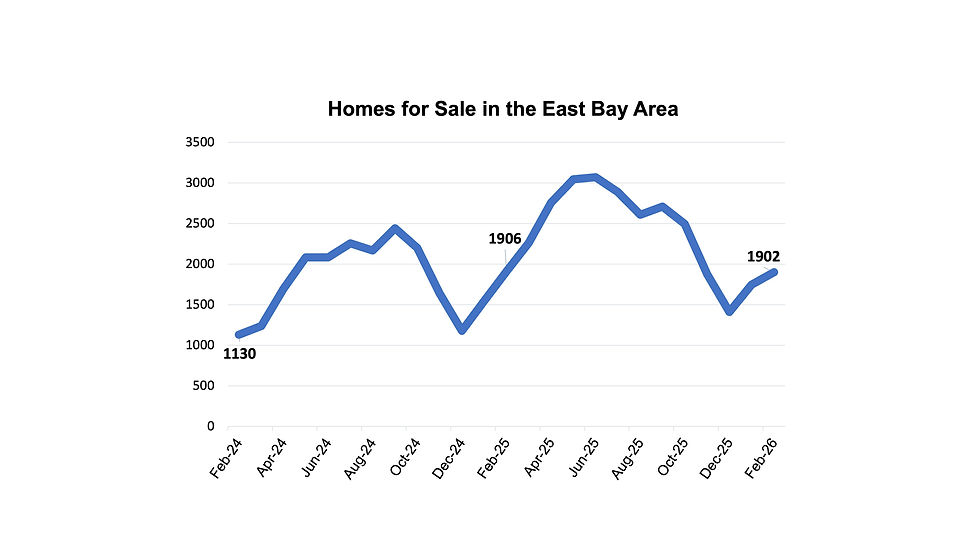 | 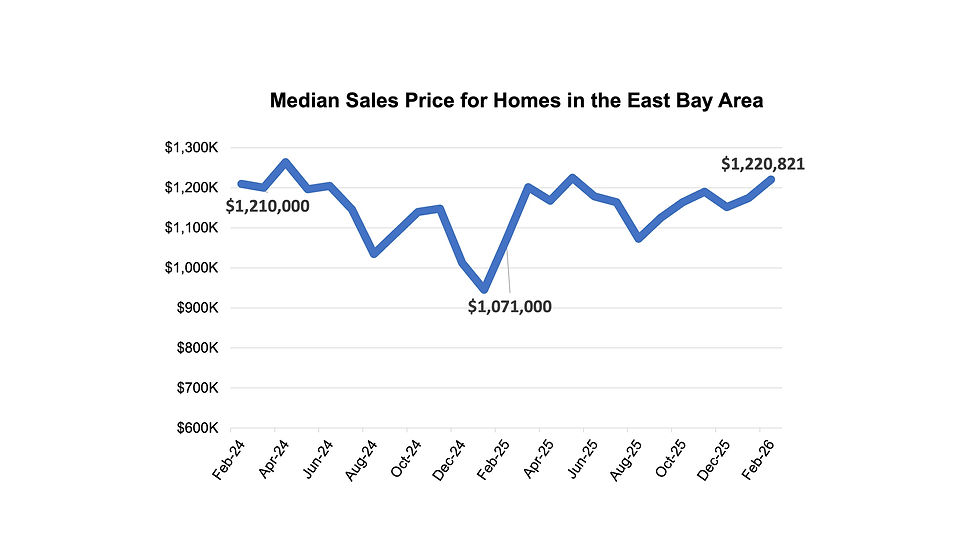 | 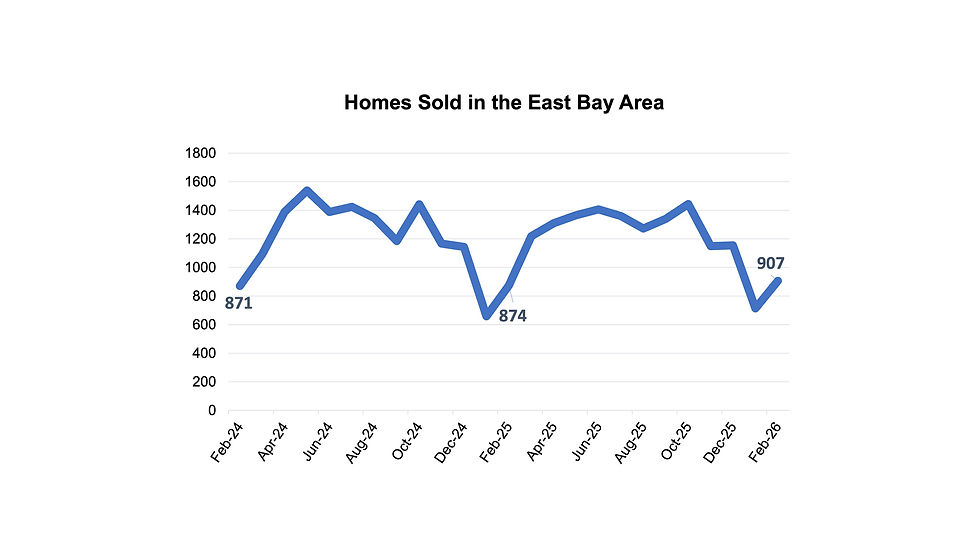 |
East Bay Area (including the 880 Corridor) The East Bay showed clear divergence. In higher-end and desirable neighborhoods, home prices remained relatively stable, with some modest gains — for example, Berkeley’s median price rose from $1.50 million to $1.63 million (+9%). However, mid- to lower-price segments faced greater pressure, with many areas experiencing price declines. Overall inventory declined in most cities, and buyers became more selective.
Lamorinda & Tri-Valley These areas demonstrated resilience in the premium segment. Lafayette’s median price increased from $1.71 million to $2.06 million (+20%). Low inventory helped support both transaction volume and prices in desirable locations.
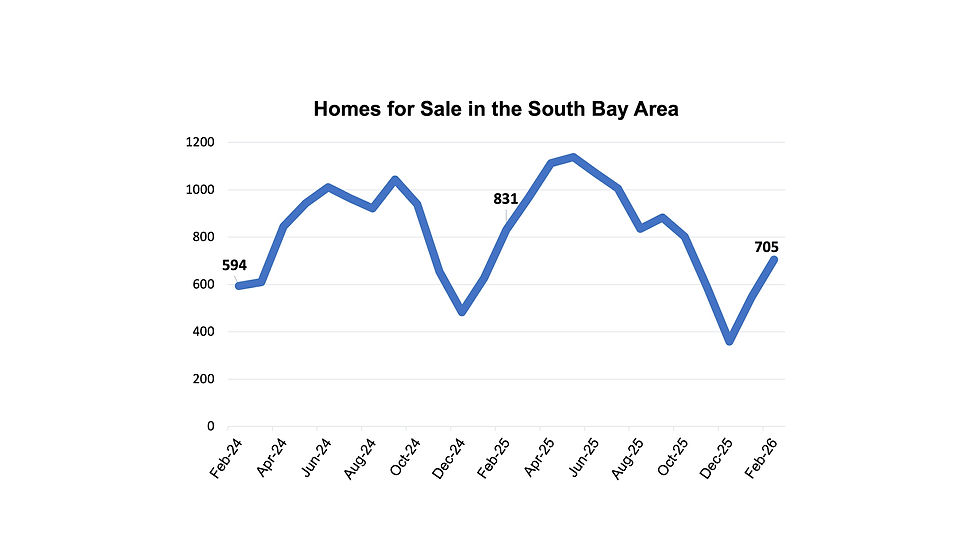 | 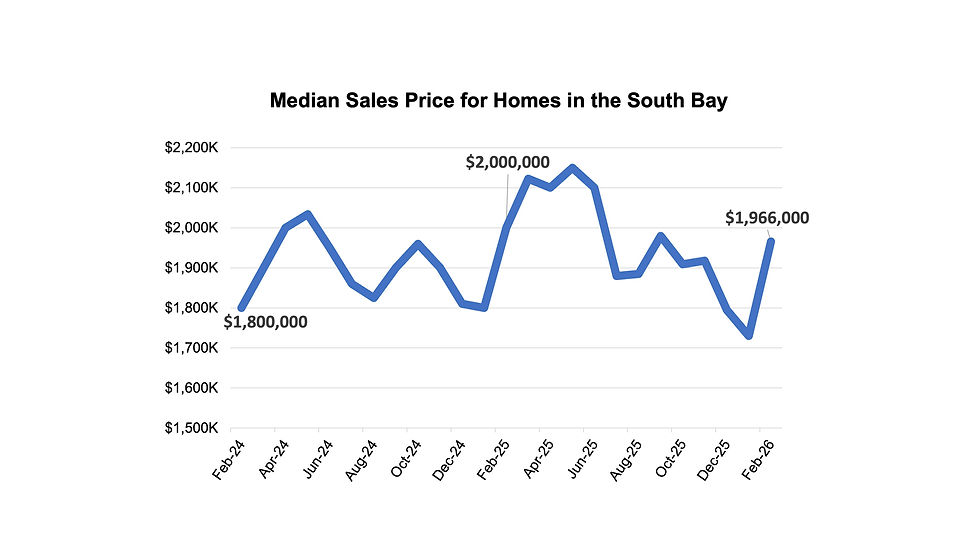 |  |
South Bay Area The South Bay’s high-end market stood out as the strongest performer. Palo Alto’s median price surged dramatically from $3.073 million to $4.90 million (+59.5%), while Los Altos rose from $4.326 million to $5.825 million (+34.6%). Strong demand from high-income tech professionals continues to support the luxury housing segment in the South Bay Area.
Outlook for Spring 2026
Looking ahead to April and the broader spring season, mortgage rates are unlikely to decline meaningfully in the near term amid persistent oil and inflation pressures. Buyer caution is expected to continue, making a swift market rebound challenging. However, the Bay Area housing market is unlikely to see a major crash. Low inventory in desirable locations, combined with persistent underlying demand for housing, should help prevent sharp declines. The most probable scenario is high-level consolidation: the overall market remains relatively flat, with significant variation by neighborhood — some premium areas holding steady or seeing slight gains, while others face more pressure. The interplay of geopolitical risks, energy-driven inflation, and tech-sector restructuring is creating a complex environment. While headwinds are real, structural supply constraints in sought-after areas continue to provide a buffer.
What are your thoughts? Do you expect the Bay Area housing market to face further price declines in 2026 due to employment and interest rate pressures, or will low inventory help it remain resilient? Feel free to share your views in the comments below.


Comments